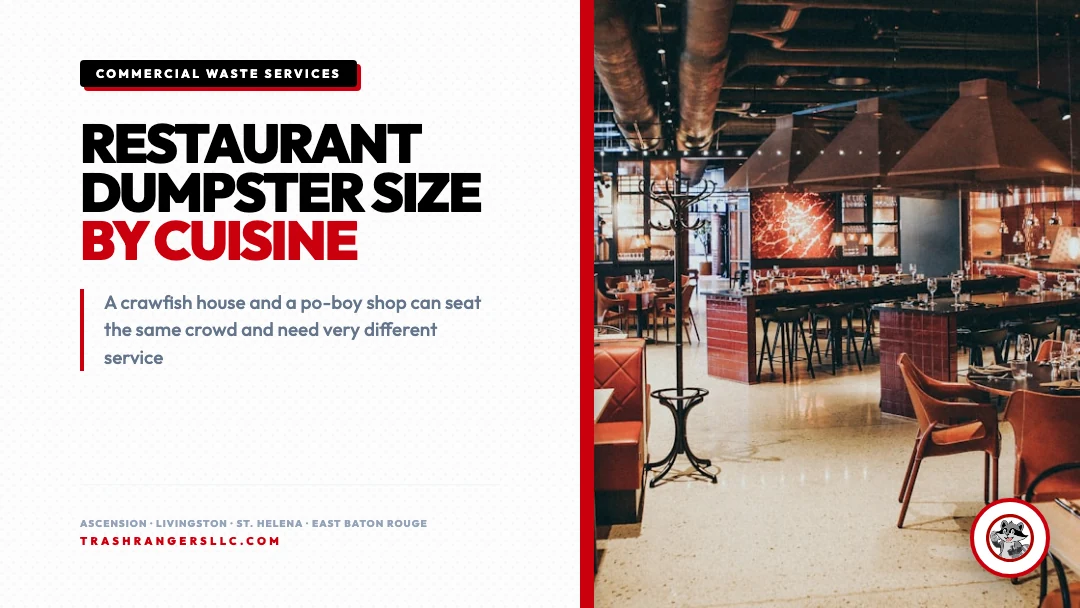

Does the Type of Restaurant Change the Dumpster Size?
Yes. Two Baton Rouge restaurants with the same seat count can need very different dumpster service depending on the menu. A crawfish or seafood house throws off heavy, wet shells that hit weight limits fast. A po-boy or fried spot is grease and cardboard heavy. A cafeteria or buffet piles up plate and prep waste. A food truck usually needs no dumpster at all. Size to your cuisine and volume, not your floor space.
TLDR:
- Seat count does not size a restaurant dumpster. Menu and volume do.
- Seafood and boil spots produce dense, wet shell waste that hits weight limits before the box looks full, with big spikes in crawfish season.
- Per EPA figures, a cubic yard of food waste weighs about 1,368 pounds, against roughly 250 to 300 for mixed trash, so weight drives overage fees more than volume.
- Po-boy and fried restaurants run heavy on fryer grease (a separate stream) and delivery cardboard.
- Cafeterias, buffets, and plate-lunch spots generate steady, high-volume food and prep waste every single day.
- Food trucks rarely need their own dumpster and usually handle waste through a commissary or shared service.
- The three levers that control your bill are size, pickup frequency, and pulling grease and cardboard out of the trash.
Everybody in Baton Rouge knows food, and everybody’s food makes a different kind of mess. A boiled seafood joint, a corner po-boy shop, a hospital cafeteria, and a festival food truck can all seat a similar crowd and still need completely different waste service. A generic size chart treats them the same, which is exactly how a restaurant ends up with overage fees or an overflowing enclosure. Here is how four Louisiana restaurant types actually break down, so you can size for the food you serve.
Not sure which bucket your kitchen falls in? Tell us your menu and your volume and we will right-size the box, the schedule, and the grease handling so you stop overpaying.
Why Your Menu Sizes the Dumpster, Not Your Seats
A sizing chart built on square footage or seat count assumes every restaurant fills a bin the same way. Kitchens do not work like that. The single biggest variable is the weight and moisture of what you throw away, because commercial dumpsters are billed on both volume and weight. Wet, dense waste hits the weight limit while the box still looks half empty, which is where surprise overage fees come from.
That is why the same 4-yard dumpster is generous for one restaurant and undersized for another. Our general restaurant dumpster sizing guide covers the core math on covers and frequency. This guide layers the next question on top of it: what does your specific cuisine do to the bin?
Seafood and Boil Houses: Heavy, Wet, and Seasonal
If you boil crawfish, crabs, or shrimp, or shuck oysters, your waste problem is weight, not volume. Shells are dense and soaked, and boil water and leftover corn and potatoes add even more wet mass. A dumpster of shells can hit its weight limit while it still looks half full, so weight-based overage fees are the number-one surprise for seafood spots.
The numbers back this up. Per the EPA’s volume-to-weight conversion factors, a cubic yard of food waste weighs roughly 1,368 pounds, against about 250 to 300 pounds for mixed trash and only about 50 pounds for flattened cardboard. Soaked seafood shells sit at the heavy end of that food-waste range, which is exactly why a shell load trips the weight limit long before the box looks full.
The other factor is the calendar. Crawfish season runs hard from late winter into early summer, so a boil-heavy kitchen sees waste volume swing with the season. The move is to plan for the peak with extra pickups during crawfish months, or a temporary roll-off dumpster for the busy season, rather than paying year-round for a box you only fill in the spring. Frequent pickups also keep shell smell and pests out of your enclosure in the Louisiana heat, which shells produce fast.
Po-Boy Shops and Fried Spots: Grease and Cardboard Rule
A po-boy shop, a fry joint, or a plate-lunch counter with a heavy fryer program has a different profile. The trash dumpster itself is often lighter than a seafood house, but two other streams take over: fryer grease and cardboard.
Used cooking oil and grease-trap waste never go in the dumpster or down the drain. They are a separate, regulated stream that has to go to a licensed liquid-waste hauler, and Baton Rouge requires grease traps to be cleaned on a schedule. The City of Baton Rouge best practices for food-service establishments spell out the trap-cleaning and record-keeping expectations. On top of grease, bread, meat, and supply deliveries mean a mountain of cardboard. Flattening and recycling that cardboard keeps it from eating the space you are paying to haul.
Grease and cardboard quietly inflate your bill. We will help you pull them out of the trash stream and size the box to what is actually left.
Cafeterias, Buffets, and Plate-Lunch Spots: Steady Volume
School and hospital cafeterias, buffets, and busy plate-lunch counters have the most predictable profile and the highest steady volume. They serve a lot of covers on a set schedule, so food and prep waste piles up every single day, not just at dinner rush.
For these kitchens, the answer is usually a larger box on a frequent, consistent schedule rather than season-driven spikes. Because the volume is steady, the risk is under-sizing and overflowing mid-week. A 6 to 8-yard dumpster picked up several times a week is a common starting point, and separating cardboard and any recyclables keeps that big box from filling with material you could divert. For a broader look at commercial options across the parish, our commercial dumpster rental guide for Baton Rouge lays out the sizes and service.
Food Trucks: Usually No Dumpster at All
A food truck is the outlier. Most trucks do not have or need their own commercial dumpster. Space is tight, volume is small, and many operators work out of a commissary kitchen that already has waste service, or they use a shared or event-provided disposal setup.
What a truck cannot skip is grease. Even a small fryer produces used cooking oil that has to go to a licensed hauler, not a storm drain or a public can. If you run a truck out of a fixed commissary, that location’s dumpster and grease service usually cover you. If you are catering a festival or private event, disposal should be part of the plan, which is where event waste and portable sanitation come together. Trucks that grow into a brick-and-mortar spot then jump straight into one of the three restaurant profiles above.
Right-Sizing Across a Louisiana Menu
Most Baton Rouge kitchens are not purely one type. A seafood house also fries, a cafeteria also bakes, and plenty of spots run a boil on weekends. The point is not to fit into one box but to know which streams drive your waste so you can plan for them. Weight and season for seafood, grease and cardboard for fried and po-boy, steady volume for cafeterias, and commissary handling for trucks.
Get the three levers right and your bill follows: the box size, the pickup frequency, and how much grease and cardboard you keep out of the trash. That is the work we do with every commercial customer, and it starts by helping you choose the right service type for your kitchen. It is why a local hauler that knows Louisiana kitchens beats a national chart every time.
Common Questions From Baton Rouge Restaurant Owners
These are the cuisine-specific questions we hear from kitchens across East Baton Rouge and Ascension Parish. If yours is not here, call us and we will size it for your exact menu.
Does a crawfish or seafood restaurant need a bigger dumpster?
Usually it needs more frequent pickups more than a bigger box. Shells are heavy and wet, so a seafood dumpster hits its weight limit before it looks full. A 6 to 8-yard box with three to six pickups a week is a common starting point, with extra pickups added during crawfish season.
Where does fryer grease from a po-boy shop go?
Never in the dumpster or down the drain. Used cooking oil and grease-trap waste are a separate stream that must go to a licensed liquid-waste hauler, and Baton Rouge requires grease traps to be cleaned on a set schedule. Keeping grease out of the trash and the drain avoids fines and sewer backups.
What size dumpster does a cafeteria or buffet need?
Cafeterias and buffets have steady, high daily volume, so they usually start around a 6 to 8-yard dumpster with several pickups a week. The exact size depends on covers served and how much cardboard and recyclable material you separate out. Consistent volume means the risk is under-sizing, not overpaying.
Does a food truck need a commercial dumpster?
Most do not. Trucks usually handle waste through a commissary kitchen with its own service or a shared setup, since on-site volume is small and space is tight. The one thing a truck still needs is proper grease disposal through a licensed hauler, even for a single fryer.
Why does my seafood restaurant keep getting overage fees?
Shell and boil waste is dense and soaked with water, so a cubic yard of it is very heavy. Commercial dumpsters are billed on weight as well as volume, so a wet shell load can trip the weight limit while the box still looks half empty. More frequent pickups usually fix it better than a bigger dumpster.
Can one dumpster handle a restaurant that boils, fries, and bakes?
Yes, with the right size and schedule, plus separate grease and cardboard handling. The key is planning for your heaviest stream. If you boil on weekends, size and schedule for that peak, keep fryer grease going to a licensed hauler, and pull cardboard out for recycling so the trash box is not doing three jobs at once.
Let’s size your waste service to your menu. Tell us what you cook and how much you serve. We will set the box, the pickup schedule, and the grease handling so you stop overpaying and stay ahead of the rush.